Sunny Days
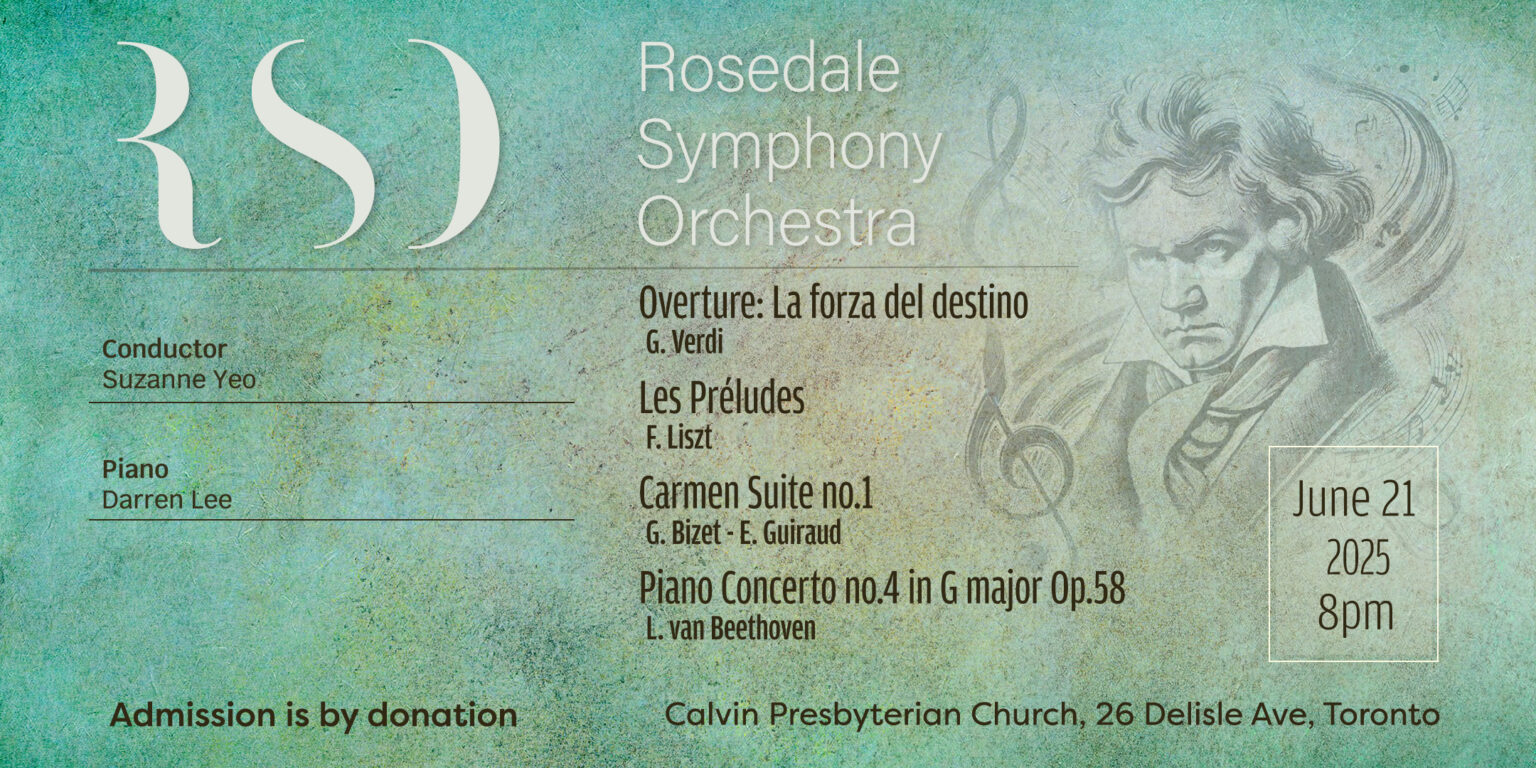
Program
Ludwig van Beethoven
(1770–1827)
Piano Concerto no.4 in G major Op.58
I.
Allegro moderato
II.
Andante con moto
III.
Rondo (Vivace)
Darren Lee,
Piano
The Fourth Piano Concerto was groundbreaking in that instead of the usual orchestra introduction, it opens with piano soliloquy that is inward and simple. From there, the movement grows into moments of grandeur and brilliance. However, what is most memorable is the tender lyricism, delicacy, warmth of tone, and especially moments of intimate, chamber music-like exchange between piano and orchestra. Following in the second movement, orchestral strings and piano alternate and finally combine in a powerful and moving dialogue: strings initially brusque and
rhythmically jagged with piano soothing and placatory. The finale is playful and brilliant with much interplay between piano and orchestra – the trumpets and drums are now featured but there are still contrasting moments of poetry to contrast.
rhythmically jagged with piano soothing and placatory. The finale is playful and brilliant with much interplay between piano and orchestra – the trumpets and drums are now featured but there are still contrasting moments of poetry to contrast.
— Intermission (20 minutes) —
Giuseppe Verdi
(1813–1901)
Overture to La forza del destino
The intensity of Verdi’s melodramatics in his opera is certainly apparent in the overture. The six opening brass exclamations create an atmosphere of foreboding and the agitated theme that follows fully conveys the doom and gloom. This motif, associated with the tragic destiny of the main characters, dominates the Overture. Many of the main themes from the opera are heard and in the process, musical dark and light alternate. The melodies from the opera intertwine throughout and lead to a thundering conclusion.
Georges Bizet
(1838–1875)
Carmen Suite no.1 (arr. Ernest Guiraud)
I.
Prélude
II.
Aragonaise
III.
Intermezzo
IV.
Séguedille
V.
Les Dragons d'Alcala
VI.
Los Toréadors
This suite contains music derived from the opera and was published years after Bizet’s death. The opening prelude introduces the ominous theme associated with both Carmen and her fate at the hands of her lover, Don Jose. The following aragoniase (a dance from Aragon in Spain) is the festive yet sinuous music that opens the final act of the opera as crowds arrive for a parade outside the bullring. An intermezzo, a serenely melancholic section based on the prelude to the final act, leads to a séguedille that Carmen sings to seduce Jose. The suite ends with a jaunty military march, “Les Dragons d’Alcala”, followed by the famous march “Les Toréadores”, the entry of the bullfighters, which is the opening piece of the opera.
Franz Liszt
(1811–1886)
Les Préludes S.97
Les Préludes is the third and most popular of his 12 symphonic poems. Here we have a free form in which a few basic themes undergo continuous transformation of melody, rhythm, harmony, timbre, dynamics, or tempo. Liszt’s program note to the piece indicates that it is considered a musical depiction of a poem by Alphonse Lamartine. The poem starts off as “What is life but a series of preludes to that unknown song whose initial solemn note is tolled by Death?”.
Venue
Calvin Presbyterian Church
26 Delisle Avenue, Toronto, Ontario